
Studio Safety
June is National Safety Month, and in a stained glass studio, that’s something we don’t take lightly.

Creating with glass is one of the most rewarding processes out there, but it comes with a unique set of materials and tools that deserve respect. The good news is that with a few consistent habits and the right setup, you can keep your workspace safe, comfortable, and enjoyable.
Whether you’re working out of a full studio or a corner of your home, here are the core safety practices we focus on every day.
Understanding Flux and Fumes
Flux is one of the most overlooked hazards in stained glass work. While solder itself produces minimal fumes, flux is a different story. Many fluxes contain acids and solvents, and when heated during soldering, release fumes.
You don’t need an industrial setup to manage this, but you do need airflow.
At minimum, we recommend setting up a fan that circulates air away from your face and work area. A small fume extractor or fume trap is also a consideration, especially if you’re working in a closed space with minimal air flow regularly or have sensitivities.
If you’ve ever finished soldering and noticed irritation in your throat or eyes, that’s your cue. Your airflow needs improvement.

Lead Safety: What Actually Matters
Lead can sound intimidating, but the biggest risk in stained glass isn’t casual contact. It is ingestion. That’s why one of the most important rules in our studio is simple. No food or drink in the work area.

When you’re soldering, you’re typically holding solder in one hand and your iron in the other. While lead absorption through skin is possible, it is not the primary concern for most artists. The real issue comes from transferring residue to your mouth, often without realizing it.
A few habits make a big difference:
Wash your hands thoroughly after working, especially before eating or drinking
Use a soap designed to remove heavy metals (we use D-Lead in the studio)
Keep your work surface clean and separate from everyday household spaces
If you’re creating pieces that will be handled frequently, like jewelry, nightlights, or small boxes, it is worth considering lead-free solder for those projects.
Protecting Your Hands and Eyes
Glass behaves exactly how you would expect, until it doesn’t.
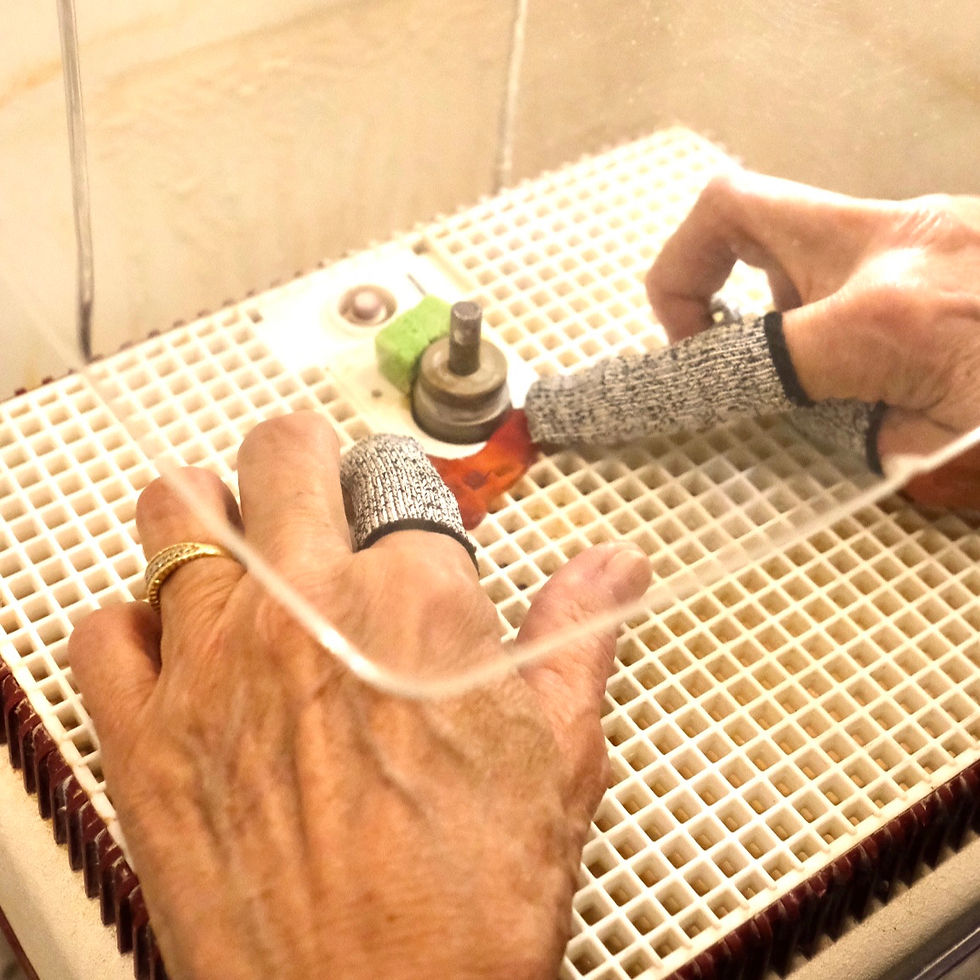
A sheet can shift, snap, or slide in ways that happen fast and without warning. That’s why we strongly recommend wearing cut-resistant gloves when handling glass. A minor slip without them can turn into a serious injury.
And one rule we always emphasize is this – if you wish to look through the glass to see how the colors and textures interact, do not hold it above your head. If it breaks, the pieces will fall toward your face. Instead, hold the glass forward of your body and angled to catch available light through it. Better yet, use a lightbox! We have one in the studio and would be happy to have you use it.


Eye protection is just as important. When cutting or grinding, small fragments can and do travel. Safety glasses or protective lenses are a simple way to prevent a situation that could permanently affect your vision.
If your grinder has a shield, that helps, but it is not a replacement for individual eye protection.
Dust, Powders, and Finishing Work
Some processes, like using powdered materials, patinas, or certain adhesives, can introduce fine particles or fumes into your workspace.
When you’re working with anything that creates dust or airborne particles, a basic dust mask is a smart addition. It is a small step that helps protect your lungs over time, especially if you’re working frequently.
Setting Up a Safe, Sustainable Workspace

Safety is not about reacting to accidents. It is about building habits and a workspace that supports you from the start.
A few simple setup choices go a long way:
Keep your tools organized so you are not reaching blindly near sharp edges
Maintain good lighting so you can clearly see cuts, edges, and solder lines
Designate a clear work zone separate from eating or living areas
Make cleanup part of your routine, not an afterthought
Do not wear open-toed shoes in the work area or glass storage area
Tie back long hair (including beards) when soldering and grinding.
The goal is to make safety feel automatic, not like an extra step.
Keep It Fun
At the end of the day, this is supposed to be fun.
The more comfortable and confident you feel in your workspace, the more you can focus on the creative side of what you are doing. A few thoughtful precautions mean fewer interruptions, fewer injuries, and a better overall experience.
If you’re just getting started or looking to improve your setup, these habits are the foundation we come back to again and again in the studio.
And if you ever have questions about tools, materials, or workspace setup, we are always happy to help guide you in the right direction.


Comments